When a breathalyzer Printout Controls Your Future
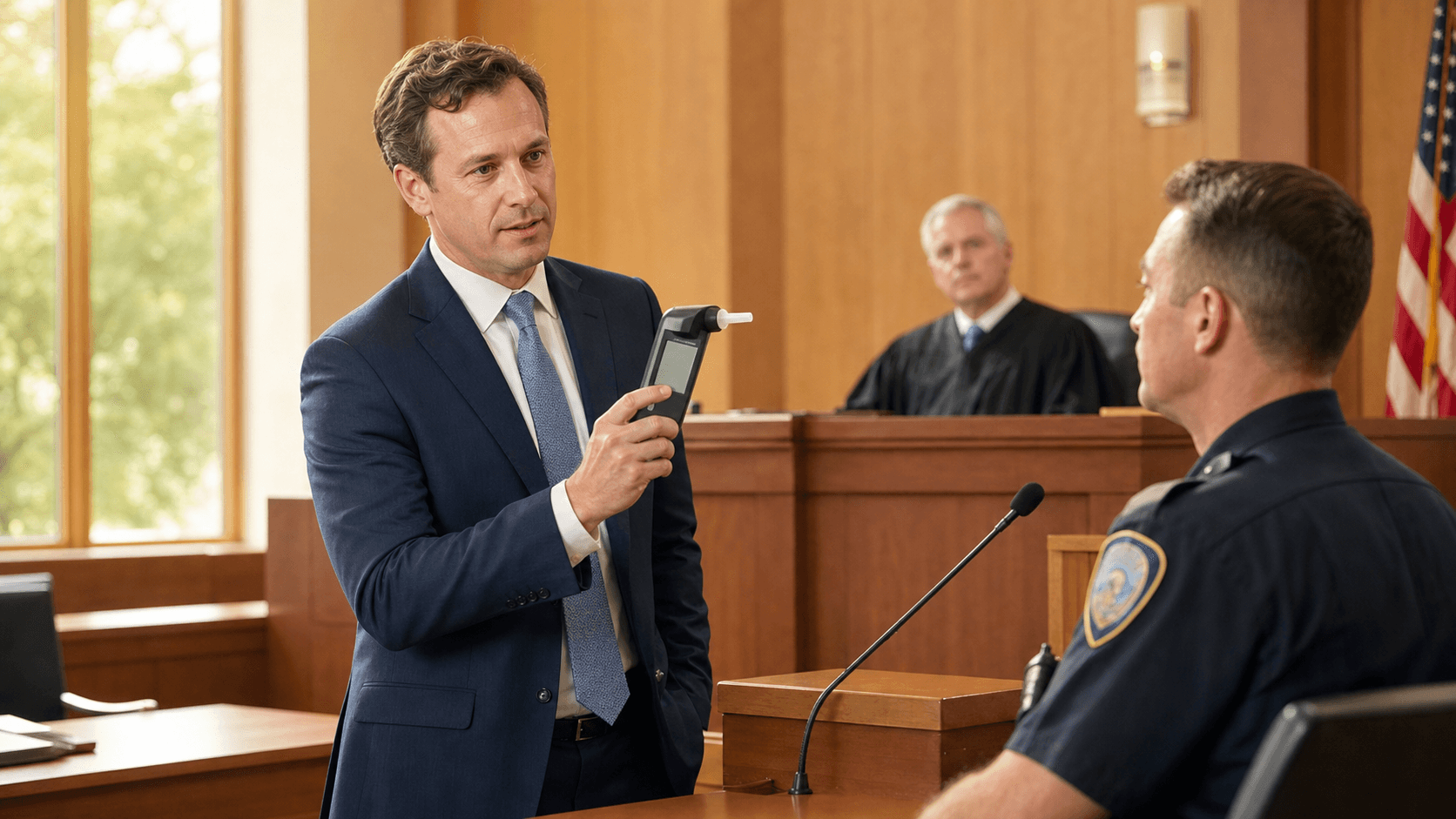
A traffic stop on a warm Ann Arbor night can change fast. One minute there are headlights and music, the next there are flashing red and blue lights in your mirror and an officer asking if you have been drinking. A short walk on the shoulder, a small plastic tube, a long breath, and suddenly a tiny slip of paper seems to decide your future.
Most people see that breathalyzer number as scientific and final. The machine prints a number, the officer nods, and it feels like the case is over. From the bench and now from the defense table, we know it is not that simple. Breath tests are tools, not truth. They can be helpful, but they can also be wrong, misread, or misused.
At the Law Office of Chris Easthope, we look at these cases through a different lens, shaped by years on the 15th District Court bench in Ann Arbor and years defending people accused of drunk driving. We have watched hundreds of breath test cases play out in real courtrooms. In this article, we share how breath tests really work, where they go off track, and how a DUI lawyer in Ann Arbor looks behind that little printout to protect a client.
What Really Happens When You Blow Into the Tube
The first thing to know is that there are usually three kinds of breath tests in a Michigan drunk driving stop.
On the roadside, officers often use a small handheld device. This is usually called a PBT, or preliminary breath test. It is used to help the officer decide whether to arrest you. The roadside result is not the main proof in court, and there are rules about when it can even be mentioned at trial.
Later, at the station, there is a larger machine used for the official chemical breath test. In Michigan, the Intoxilyzer device is used for the admissible BAC at a trial. That station test is usually what shows up in the police reports and what prosecutors point to when they talk about your blood alcohol content.
If you refuse to take the officer's test, either the Intoxilyzer or blood test, the officer will get a search warrant and have your blood drawn at a local medical facility.
Why does this difference matter? Because:
- The roadside PBT is a screening tool, not the final word
- The station test or blood draw have stricter rules and procedures around it
- Judges look at whether those rules were actually followed
- Problems with either test can affect how strong the case really is
From the bench, we often saw cases where the number on the machine did not match how the person looked. A driver might have a high reported BAC but steady speech, normal balance, and no trouble finding documents. That raises questions. Machines may not drink, but they can still be off.
Michigan has implied consent laws, which means that by driving on public roads, you agree to chemical testing if lawfully arrested for OWI. Refusing the official test can lead to license sanctions, separate from the criminal case. But agreeing to blow does not mean the machine is always right, and it does not mean a judge will simply accept whatever the printout shows.
It can be a little funny, in a dark way, that a metal box that never had a beer in its life gets to judge every person who did. But the stakes are serious: possible jail, long license suspensions, work problems, and lasting consequences. That is why understanding how these tests really work is so important.
Common Breathalyzer Mistakes Judges See All the Time
From the bench, certain problems kept coming up in breath test cases. Judges see patterns, and good defense lawyers learn to spot them too.
Some of the most common issues include:
- Skipping or shortening the required observation period
- Mouth alcohol from recent drinking, mouthwash, or vomiting
- Officers rushing through instructions or paperwork
- Distractions during the test, like phones, radios, or other calls
For example, we often saw cases where the officer did not really watch the person for the full observation period before the station test. The rule is there to help make sure nothing happens, like burping or regurgitation, that could bring alcohol from the stomach into the mouth and skew the result. When the timing was off or not documented well, that raised doubt about the number.
Then there were the "mouthwash" and "burping" situations. Someone might use a strong alcohol-based mouthwash right before driving. Later, the machine reads high, even though the person does not act impaired. In other cases, a person burps during the waiting period and the officer just shrugs it off. Those things matter. They can cause the machine to read mouth alcohol instead of what is really in the lungs.
Another frequent issue involves calibration and maintenance. Breath machines do not just sit in a corner and magically stay accurate forever. They need:
- Regular calibration checks
- Up-to-date maintenance logs
- Proper repairs when something is off
- Officers who are trained and current on procedures
A seasoned OWI DUI lawyer in Ann Arbor will know to ask for those records and compare them to the time of the test. If the logs are missing, incomplete, or show problems close in time to your test, that can seriously weaken the prosecution's case.
When the Machine Says One Thing and the Video Says Another
As a judge, you rarely rely on one single piece of evidence. You look at the whole picture: the dashcam video, the bodycam, the field sobriety tests, the officer's report, the driver's statements, and the breath number. When these pieces do not fit together, it gets interesting.
There were plenty of cases where we watched video of a driver who seemed completely steady. Clear speech. Normal walking. No trouble following directions. Then we looked at the breath test number and it claimed a level of alcohol that usually comes with slurred speech, stumbling, and trouble focusing. That kind of mismatch tends to get a judge's attention.
When an OWI DUI lawyer sees that gap between the number and the video, it opens the door to several options:
- Filing motions to challenge or suppress the breath result
- Arguing for reduced charges that better match the behavior shown
- Pointing out contradictions in the officer's testimony
- Questioning how and when the test was given
Jurors pay close attention to video too. When they expect a cartoon version of a "drunk driver" and instead see someone who looks calm and in control, they often lean forward and watch more carefully. But these cases are not won by drama. They are won by careful review of every piece of evidence and clear, simple explanations of why something does not add up.
Why Your DUI OWI Lawyer's Courtroom Experience Matters
Not every argument works in a real courtroom. A lawyer may sound impressive, but judges and juries are usually persuaded by the same basic things:
- Credible witnesses who stick to facts
- Clean, consistent police procedures
- Evidence that matches common sense
- Clear legal arguments that tie everything together
A lawyer who has served as a judge has sat through countless drunk driving cases and watched which arguments land and which fall flat. That experience shapes how we handle breath test challenges now. We know what questions judges are silently asking when they look at a breathalyzer printout, and we know where weak points often hide.
Local experience in Ann Arbor and the surrounding Michigan courts matters too. Every courthouse has its own rhythm. Prosecutors, judges, and probation departments may handle similar cases differently. That can affect whether it makes sense to fight the breath test result at a hearing, aim for a reduced charge, or prepare for trial.
Warm weather in Ann Arbor often comes with more traffic stops, more tailgates, more lake trips, and more OWI enforcement. A fun night can turn into a police stop faster than people expect. When that happens, it helps to have someone who knows both sides of the bench and understands how breath test issues play out down at the courthouse.
Turn a Bad Night Into a Smart Legal Strategy
A high breath test result feels scary. It can look like the case is already lost. From our experience, that number is only the start of the story, not the end. The key questions become: Was the stop lawful? Did the officer follow the rules? Was the machine working properly? Does the video match the printout?
Moving quickly matters. Video can be erased. Logs can be harder to track down with time. Witness memories can fade. Looking closely at the breath test, the police reports, and the recordings early on can change how a Michigan DUI case ends.
At the Law Office of Chris Easthope, every client works directly with Chris, who brings his time on the 15th District Court bench into each defense. That former judge's view helps us see where the machine, the officer, or the process may have gone wrong in your case.
You cannot go back and un-take that breath test. But you can decide who tells your side of the story when that little slip of paper shows up in an Ann Arbor courtroom.
Protect Your Future With Experienced DUI Defense Today
If you are facing a drunk driving charge, you do not have to navigate the legal system alone. As a dedicated DUI lawyer in Ann Arbor, the Law Office of Chris Easthope is ready to review your case and explain your options clearly. We will work with you to protect your license, your record, and your long-term goals. To schedule a consultation and get started, please contact us today.